 |
 |
Editor: Dr Tim Harding |
 |
 |
 |
 |
 |
 |
|
|
Editor: Dr Tim Harding |
|
|
|
|
|
|
© Dr Tim Harding
Last modified:
17 October 2026
Round 9 at Hastings was played on the 16th of August 1895 after a rest day when one adjourned game was completed.
We found four problem games in this round. In each case Schallopp (and most modern sources) follow the German weekly chess magazine of the day but it was surely wrong in three of these cases and only right in the fourth (and most important) of the games in this article.
The score of this game in ChessBase’s Mega Database 2025 is as follows: 1.d4 d5 2.c4 e6 3.Nc3 Nf6 4.Nf3 Be7 5.Bf4 0–0 6.e3 c5 7.Bd3 Nc6 8.0–0 dxc4 9.Bxc4 Nh5 10.dxc5 Nxf4 11.exf4 Bxc5 12.Ne4 Be7 13.Rc1 Qa5 14.Qc2 Nb4 15.Qe2 Nd5 16.g3 b6 17.Nd4 Bb7 18.Nb3 Qa4 19.Bxd5 exd5 20.Nc3 Qd7 21.Nd4 Bf6 22.Qd3 Rad8 23.Rfd1 Rfe8 24.Re1 g6 25.Rxe8+ Qxe8 26.Rd1 Qd7 27.Qe3 Re8 28.Qf3 a6 29.Qd3 b5 30.a3 Qc7 31.Qf3 Qc4 32.Nce2 Re4 33.Rc1 Bxd4 34.Rxc4 dxc4 35.Kf1 Bxb2 36.f5 a5 37.g4 b4 38.axb4 axb4 39.Qg3 Be5 40.f4 Bb2 41.Qh4 Re8 42.f6 Be4 43.g5 h5 44.Ng3 c3 45.Nxe4 c2 46.Ng3 c1Q+ 47.Kg2 Qd2+ 48.Kh3 Re2 49.Nxe2 Qxe2 50.Qg3 Bd4 51.f5 Qf1+ 52.Kh4 Bf2 53.fxg6 fxg6 54.f7+ Kxf7 0–1
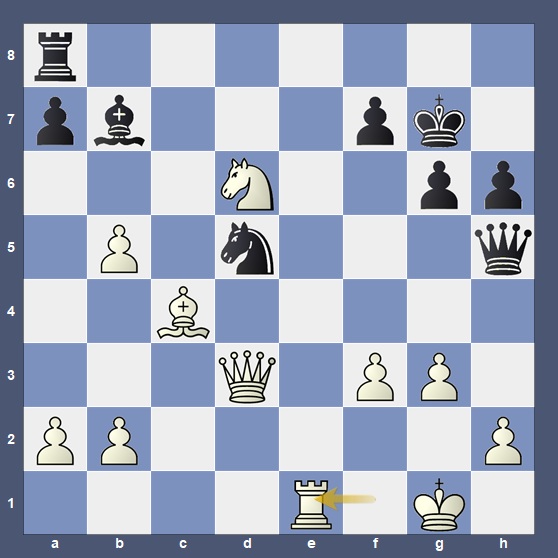
The discrepancy between sources is at Black’s 22nd move, when Cheshire (pp.151-153) has 22…QR to QB sq (i.e., 22…Rac8); the annotations in that book were by Dr. Tarrasch. Both Crouch/Haines and Pickard followed Schallopp (pages 163-165) with 22…Rad8. Schallopp appears to have found this version in the Deutsches Wochenschach (28 Nov. 1895, pages 414-415). The two versions then differ until after Black's 27th move when (after the exchange of one pair of rooks) the Black queen’s rook moves to e8.
Conclusion: The difference seems relatively trivial and there is no clear evidence to prefer the Wochenschach/Schallopp version over the official tournament book, especially as Tarrasch was annotator. The d-pawn is not in need of immediate overprotection so moving the rook to an open file looks more logical. Therefore some databases need to amend 22…Rad8 to 22…Rac8.
The score of this game in ChessBase’s Mega Database 2025 is as follows: 1.d4 c5 2.d5 g6 3.e4 Bg7 4.Bd3 Na6 5.a3 Nc7 6.Ne2 d6 7.0–0 Nh6 8.f3 e6 9.c4 b5 10.cxb5 exd5 11.exd5 Bb7 12.Bc4 Nf5 13.Nbc3 0–0 14.Qd3 Qe7 15.Bd2 Rfe8 16.Rae1 Qh4 17.Ne4 h6 18.Bc3 Nd4 19.Nxd4 cxd4 20.g3 Qh5 21.Bxd4 Nxd5 22.Bxg7 Kxg7 23.Nxd6 Rxe1 24.Rxe1 Nb6 25.Qd4+ Kh7 26.Ne8 1–0, but there appear to be two mistakes in this version.
The first difference in the score occurs at White’s 5th move and thereafter the versions follow the same sequence until Black’s 24th move, when the variant 5th move finally makes its impact as the diagram below shows.
Firstly. Cheshire (pp.148-149), in which the notes were by Blackburne, had 5. P to QB3 (i.e., 5. c2-c3) but Schallopp (pp.160-161) gave 5.a2-a3. The a-pawn move is also in Crouch/Haines (page 145) and in Pickard’s tournament book, and in Urcan’s biography of Pollock (game 495 on pages 432-433). This is what ChessBase gives. It seems to me somewhat strange that Urcan cites as his source “tournament book, pages 148-149” (the pagination in Cheshire) although he follows the score given by Schallopp. This suggests he did not actually pay much attention to the score and took the moves from ChessBase.
Then Cheshire has 24…Kt to Kt5 (i.e., 24…Nb4) but Schallopp has 24…Nb6 as do Urcan and Crouch/Haines. The origin of the 5 a3/ 24…Nb6 version appears to have been, once again, the Deutsches Wochenschach (27 Oct 1895, pages 375-376).
Our diagram shows the position after White’s 24th move in the Cheshire version, where the c-pawn advanced from c3 to c4 at move 9. In the Wochenschach Schallopp version, White’s 9th move was c2-c4 and there is a pawn on a3. John Saunders notes in Britbase that perhaps Schallopp “corrected” the score because in his version, with 5 a3 instead of 5 c3, the N would be en prise to the a3-pawn on b4. The move 24…Nb6 makes no sense because (apart from losing to the game continuation), it would have no threat and just leave both b7 and f7 en prise.
Conclusion: It seems fairly clear that Schallopp got this one wrong and the modern works that follow the German tournament book are in error. Therefore the score of this game should be changed in databases to:
1.d4 c5 2.d5 g6 3.e4 Bg7 4.Bd3 Na6 5.c3 Nc7 6.Ne2 d6 7.0–0 Nh6 8.f3 e6 9.c4 b5 10.cxb5 exd5 11.exd5 Bb7 12.Bc4 Nf5 13.Nbc3 0–0 14.Qd3 Qe7 15.Bd2 Rfe8 16.Rae1 Qh4 17.Ne4 h6 18.Bc3 Nd4 19.Nxd4 cxd4 20.g3 Qh5 21.Bxd4 Nxd5 22.Bxg7 Kxg7 23.Nxd6 Rxe1 24.Rxe1 Nb4 25.Qd4+ Kh7 26.Ne8 1–0.
The score of this game in ChessBase’s Mega Database 2025 is as follows:
1.e4 e5 2.Nf3 Nc6 3.Bc4 Bc5 4.b4 Bxb4 5.c3 Bc5 6.0–0 d6 7.d4 exd4 8.cxd4 Bb6 9.Nc3 Bg4 10.Bb5 Kf8 11.Be3 Nge7 12.a4 a5 13.Bc4 Bh5 14.Kh1 Nb4 15.d5 Bxe3 16.fxe3 Kg8 17.Rc1 Ng6 18.Be2 h6 19.Nd4 Bxe2 20.Qxe2 Na6 21.Rf3 Ne5 22.Rg3 Nc5 23.Rf1 Kh7 24.Qh5 Rg8 25.Nf5 Qf8 26.Rh3 Ncd7 27.Qe2 Rh8 28.Nb5 Rc8 29.Nbd4 c5 30.Nb5 Ra8 31.Nbxd6 Ra6 32.Nb5 Rg6 33.Rh4 Qd8 34.Rhf4 b6 35.Nfd6 Rf6 36.Qh5 Ng6 37.Nxf7 Nxf4 38.exf4 Qf8 39.Ng5+ Kg8 40.Ne6 Qf7 41.Qh3 Nf8 42.Nd6 Qd7 43.e5 Rxe6 44.dxe6 Qxe6 45.Qg3 Nd7 46.Re1 Nf8 47.f5 Qd7 48.e6 1–0.
In this case too it seems that ChessBase followed Schallopp’s German tournament book, which in turn took its version of the score from the Deutsches Wochenschach for 10th November 1895 (pages 389-390).
When Thomas Niessen’s comparison software was run on different database versions of this game, it reported "Swapped 16B-18W, 22B & 23B, 27W-28B."
The problems with this game are less trivial to resolve. The diagram shows the position after White’s 16th move, where the divergences begin.
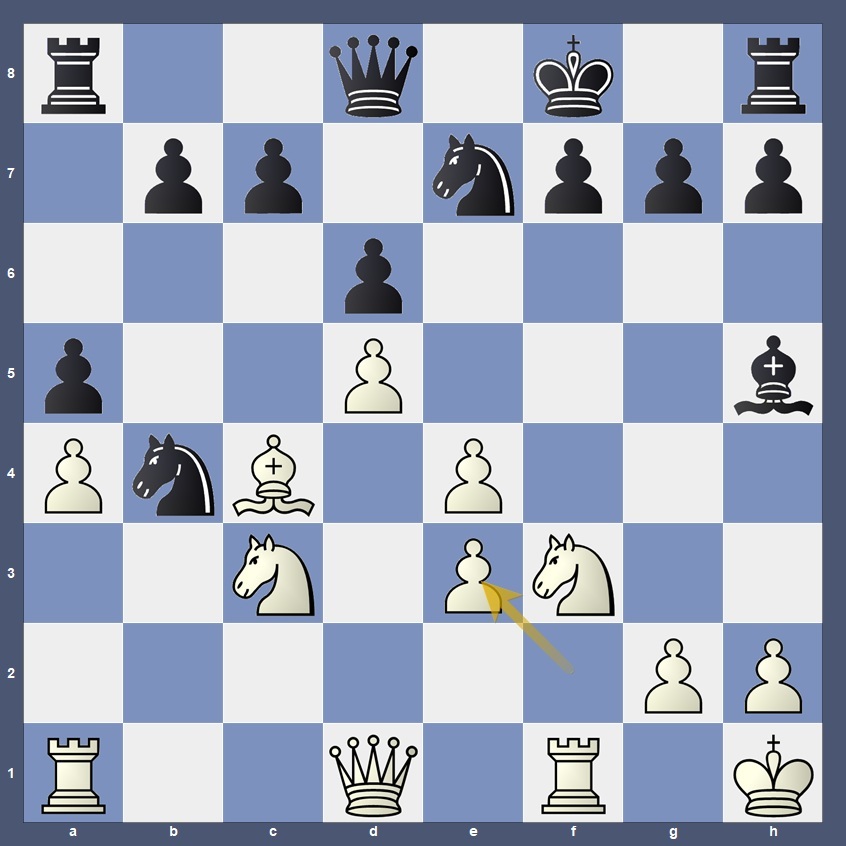
Cheshire’s version was on pages 141-143 with notes by Tarrasch. They have 16…Kt to Kt 3 17 B to K2 K to Kt sq 18 R to Bsq; which Pickard copies in algebraic as 16…Ng6 17 Be2 Kg8 18 Rc1.
Schallopp (pages 170-172) and Crouch/Haines have the sequence shown above, 16…Kg8 17 Ra1-c1 Ng6 18 Be2. Then Cheshire has 22…K to R2 23 R to Bsq Kt to B4 whereas Schallopp has 22…Nc5 23 Rf1 Kh7. The third discrepancy is when Cheshire has 27 Kt to Kt5 R to Bsq 28 Q to K2 R to KRsq whereas Schallopp has 27 Qe2 Rg8-h8 28 Nb5 Rac8. After Black’s 28th move there are no differences. Hoffer in The Field only gave the finish from a diagram after Black’s 30th move so is of no help here.
Schlechter’s version in the Algemeine Sportzeitung of 27 October 1895 (page 1125) agrees with Cheshire in each case. If Cheshire and Schlechter are right then the true score of this game was as shown in Britbase, viz, 1.e4 e5 2.Nf3 Nc6 3.Bc4 Bc5 4.b4 Bxb4 5.c3 Bc5 6.0–0 d6 7.d4 exd4 8.cxd4 Bb6 9.Nc3 Bg4 10.Bb5 Kf8 11.Be3 Nge7 12.a4 a5 13.Bc4 Bh5 14.Kh1 Nb4 15.d5 Bxe3 16.fxe3 Ng6 17.Be2 Kg8 18.Rc1 h6 19.Nd4 Bxe2 20.Qxe2 Na6 21.Rf3 Ne5 22.Rg3 Kh7 23.Rf1 Nc5 24.Qh5 Rg8 25.Nf5 Qf8 26.Rh3 Ncd7 27.Nb5 Rc8 28.Qe2 Rh8 29.Nbd4 c5 30.Nb5 Ra8 31.Nbxd6 Ra6 32.Nb5 Rg6 33.Rh4 Qd8 34.Rhf4 b6 35.Nfd6 Rf6 36.Qh5 Ng6 37.Nxf7 Nxf4 38.exf4 Qf8 39.Ng5+ Kg8 40.Ne6 Qf7 41.Qh3 Nf8 42.Nd6 Qd7 43.e5 Rxe6 44.dxe6 Qxe6 45.Qg3 Nd7 46.Re1 Nf8 47.f5 Qd7 48.e6 1–0
Conclusion: It is hard to understand why two versions of the middle portion of the game circulated. We prefer to follow the official English tournament book.
In terms of the importance of the players — their first encounter since Lasker won the world title from his opponent — this might be considered the most important case. It is features one of the most blatant errors in the Cheshire tournament book. Yet for that reason this was actually one of the simplest cases to decide who was right. The case was already discussed in detail in my Steinitz in London book (see page 326).
The score of this game according to ChessBase Mega Database 2025 was: 1.e4 e5 2.Nf3 Nc6 3.Bb5 a6 4.Ba4 d6 5.0–0 Nge7 6.c3 Bd7 7.d4 Ng6 8.Re1 Be7 9.Nbd2 0–0 10.Nf1 Qe8 11.Bc2 Kh8 12.Ng3 Bg4 13.d5 Nb8 14.h3 Bc8 15.Nf5 Bd8 16.g4 Ne7 17.Ng3 Ng8 18.Kg2 Nd7 19.Be3 Nb6 20.b3 Bd7 21.c4 Nc8 22.Qd2 Nce7 23.c5 g6 24.Qc3 f5 25.Nxe5 dxe5 26.Qxe5+ Nf6 27.Bd4 fxg4 28.hxg4 Bxg4 29.Qg5 Qd7 30.Bxf6+ Kg8 31.Bd1 Bh3+ 32.Kg1 Nxd5 33.Bxd8 Nf4 34.Bf6 Qd2 35.Re2 Nxe2+ 36.Bxe2 Qd7 37.Rd1 Qf7 38.Bc4 Be6 39.e5 Bxc4 40.Nf5 1–0 and this is correct.
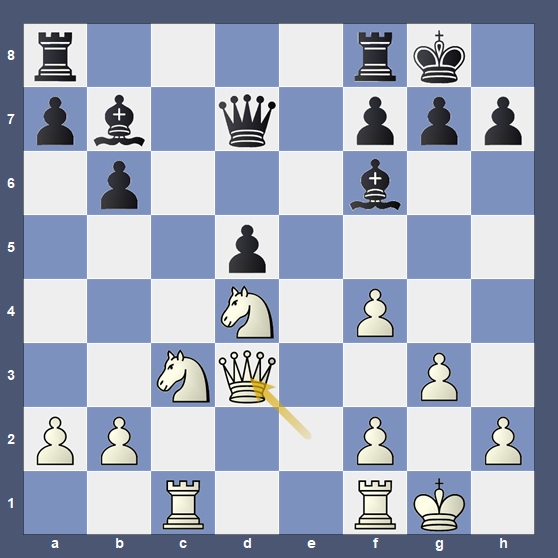
The diagram shows the position after White's 37th move.
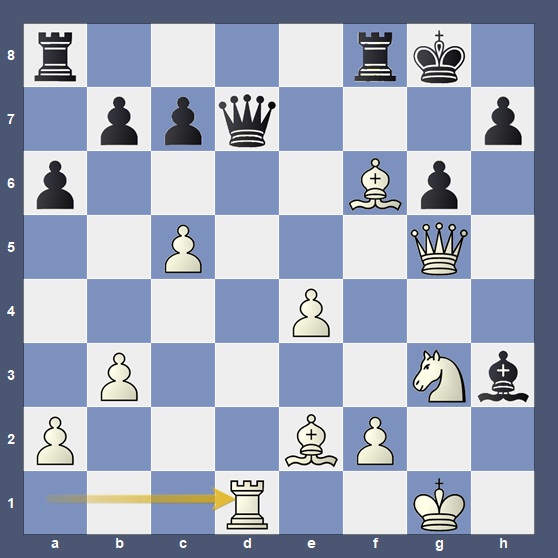
Cheshire (p145) has 37…Q to Bsq (i.e., 37…Qc8) which would mean the sequel does not make sense. His continuation was 38 Bc4+ Be6 39 e5 Bxc4 40 Nf5 1-0 but this obviously cannot be right because it puts the N en prise. The error was apparently made by the annotator, Gunsberg, and not checked by the book's editor.
Schallopp (pp165-66) has 37…Qf7 which must be correct. He did not make any comment at this point; he just gave the right move. Probably he followed the Deutsches Wochenschach (25 August, pages 297-298) and/or the Deutsche Schachzeitung volume 50 (Sept. 1895, pages 281-282) which both give 37...Qd7-f7 with no comment. The correct move (Q to B2 in descriptive notation) was given first in the London Daily News (17 August) and also in The Field (24th August) as Schallopp may also have seen. Bachmann's Schachmeister Steinitz had the correct score too. Pickard had the right 37th move (but didn't comment on Cheshire’s error.)
Crouch and Haines noticed the problem but their proposed solution is wrong; I suspect this means that they cannot have looked at what Schallopp wrote. They gave 37…Qc8 38 Bc4+ Be6 and now changed White's 39th to Be5 which is not in any primary source. John Saunders on Britbase originally posted the Cheshire version and at one time tried a different solution, ending 39 Nf5 1-0, which would win but is also not what happened. I believe John now accepts that my Steinitz book has it right.
Conclusion: Gunsberg clearly either misread the scoresheet or was given a copy with an erroneous move. His note 14 at the top of page 147 seems to show that it never occurred to him that Black’s 37th move was actually Q to KB2. It is hard to understand why Crouch and Haines came up with their weird finish when they might have checked Schallopp.
As we have also written in another article, published long ago on this website but perhaps not noticed by many people, there are several problems with the accepted scores of other late Steinitz games, which fell outside the scope of our book about his time in Britain.
This series will continue soon with Round 10 and onwards...